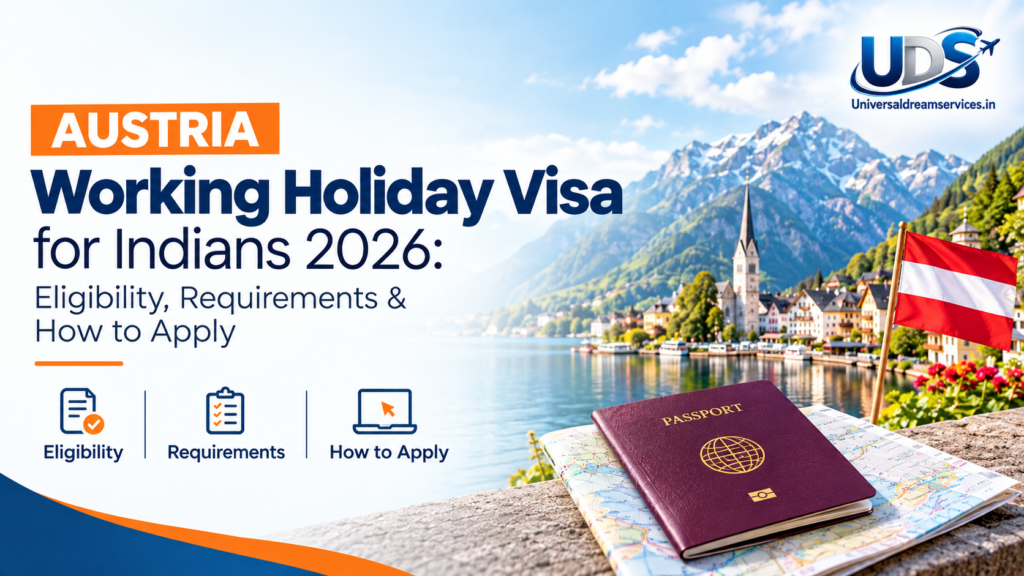
Austria Working Holiday Visa for Indians 2026: Eligibility, Requirements & How to Apply
Austria Working Holiday Visa for Indians 2026: Eligibility, Requirements & How to Apply Planning to travel to Austria and experience European life while also working during your stay? The Austria Working Holiday Visa for Indians 2026 gives eligible young Indian citizens an opportunity to stay in Austria for up to 12 months while travelling, experiencing Austrian culture and taking up permitted employment during the stay. Austria’s Working Holiday Programme is designed mainly for cultural and travel experiences. Work and education can be undertaken during the stay, but they should not be the primary purpose of the visit. For Indian citizens, the Working Holiday Visa is issued as a Visa D – Working Holiday Programme (WHP), and applications can be submitted at the Austrian Embassy in New Delhi. The current official visa fee listed for stays exceeding 90 days is EUR 195. In this guide, Universal Dream Services explains the Austria Working Holiday Visa requirements for Indians, eligibility, documents, fees, application process, work opportunities and important points to know before applying. Austria Working Holiday Visa for Indians 2026 Requirement Details Eligible nationality Indian citizens Age 18 to 30 years, inclusive at the time of application Maximum stay Up to 12 months Visa type Visa D – Working Holiday Programme Application location Austrian Embassy in New Delhi Visa fee EUR 195 for stays over 90 days Insurance Travel, health and accident insurance Minimum insurance cover EUR 30,000 Financial proof Sufficient funds for the initial period Travel proof Return/two-way ticket or sufficient funds to purchase one Passport Must meet Austrian validity and blank-page requirements Employment Permitted under the Working Holiday Programme Permanent residence Not a direct PR visa India and Austria have established a Working Holiday Programme for young citizens of both countries. The programme allows eligible participants to stay for up to 12 months, with employment and study being incidental to the main purpose of a holiday and cultural experience. What Is the Austria Working Holiday Programme? The Austria Working Holiday Programme provides young people with an opportunity to experience another country’s culture, lifestyle and working environment.Under the programme, eligible Indian citizens can spend up to 12 months in Austria. During their stay, they can travel around Austria, experience local culture and undertake employment to help finance their holiday. View this post on Instagram A post shared by Universal Dream Services | Immigration Consultant. (@universaldreamservices) The programme is different from a normal work visa Austria route because employment is not supposed to be the primary reason for travelling.Austria’s official Working Holiday information explains that these programmes are intended to help young people finance their holiday, gain practical work experience and benefit from educational or language opportunities. Who Can Apply for the Austria Working Holiday Visa? Indian citizens may be eligible if they satisfy the requirements of the India-Austria Working Holiday arrangement. The agreement specifies that applicants must generally: Be Indian citizens. Be between 18 and 30 years old, both ages included, at the time of application. Have the primary intention of holidaying in Austria. Treat employment and education as incidental rather than the main purpose of the visit. Not be accompanied by dependent family members. Not have previously completed a Working Holiday stay under the programme. Hold a valid Indian passport. Have a return ticket or sufficient funds to purchase one. Have sufficient funds for their initial stay. Have adequate health insurance. Pay the applicable visa application fee. Because immigration rules and application procedures can change, applicants should always check the latest official requirements before submitting an application. How Long Can Indians Stay in Austria? Eligible Indian citizens can stay in Austria for up to 12 months under the Working Holiday Programme.The visa is temporary and is intended for a limited working holiday and cultural experience. It should not be confused with a permanent residence permit. If you want to continue living in Austria after your Working Holiday period, you would need to qualify for another appropriate Austrian residence or immigration route. Can Indians Work in Austria on a Working Holiday Visa? Yes. Working is an important feature of the Working Holiday Programme.Eligible participants can undertake employment during their stay to help finance their holiday. Austrian authorities state that Working Holiday participants can work under the framework without requiring prior employment authorization, subject to the applicable rules. Employers must still follow Austrian wage, labour and social-security requirements.Some applicants search for terms such as Austria working holiday jobs when planning their trip. Depending on your skills, location, language ability and local opportunities, available jobs may vary.Possible areas of employment may include hospitality, tourism, seasonal work, restaurants, hotels, retail and other permitted positions.A Working Holiday Visa should not be treated as a guarantee of employment. Applicants should have sufficient funds to support themselves initially rather than depending entirely on finding a job immediately after arrival. Austria Working Holiday Visa Requirements for Indians The Austrian Embassy’s current India-specific requirements include the following documents: 1. Completed Visa D Application Form Applicants must complete the appropriate Visa D application form Austria and provide the required information accurately.The form should be completed and signed according to the latest instructions provided by the Austrian authorities. 2. Biometric Passport Photograph A recent biometric photograph meeting the applicable ICAO requirements is required.Belarus already provides a visa-free route for eligible Indian travelers for short stays. 3. Valid Indian Passport Your passport must meet the Austrian requirements. According to the current official guidance, the passport should: Be valid for at least three months after the last day of the applied visa. Not be older than 10 years. Have at least two blank pages. 4. Travel, Health and Accident Insurance Applicants must have sufficient travel, health and accident insurance covering the entire period of their stay. The current minimum insurance coverage specified by the Austrian authorities is EUR 30,000. 5. Proof of Sufficient Funds You must demonstrate that you have enough financial resources to cover your initial expenses in Austria. This is important because the purpose of the programme is not to arrive